Training
Talawa Theatre Company aims to dismantle the systems that create a lack of safety for and exclusion of racialised people, whilst holding their lived experiences and expertise at the centre of our work.
Evolution of the Unconscious Bias,
Anti-Racism and Diversity Training (UBARD) Training
Talawa Theatre Company began creating this training in 2018, in response to Black artists coming to us and sharing the racist experiences they were having across the industry. The training was then developed in response to us wanting to create a sectoral shift that allowed racialsied artists to walk into any organsiation and feel as though they would be seen, heard and safe. Since then, we have worked with countless organisation within and outside of our sector and have provoked thought around what can be done to create a more equitable industry and society in hundreds of people.
Since June 2024, Amelia Michaels, Training Officer at Talawa Theatre Company, and Equality, Diversity and Inclusion Consultant Sharla Smith have conducted a full redesign of the Unconscious Bias, Anti-Racism and Diversity Training, taking on participant and facilitator feedback from the last five years to deliver this offering. An immense amount of thought, energy and consideration has gone into what is most needed for a training programme that speaks to racism in the UK in 2024.
What to expect
In its simplest form, Talawa Theatre Company define racism as "prejudice and discrimination intersecting with institutional and systemic power structures”.
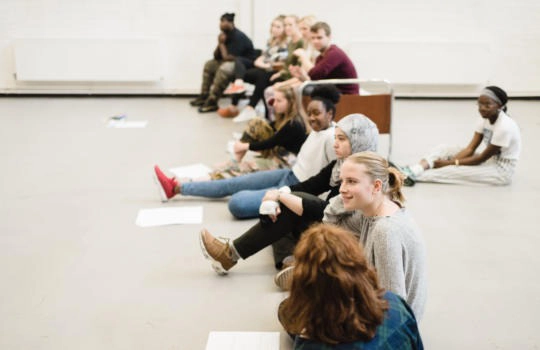
This renewed UBARD Training programme is offered both in-person and remotely. This dynamic participatory training will equip teams with the tools and frameworks necessary to address and challenge racism in their working environments and wider sector.
Our UBARD Training programme facilitators have a wealth of social inclusion and diversity knowledge and are experts in their facilitation practice.
These sessions will take participants on a guided journey that if fully engaged with, should provoke un-comfortability and questioning of self and the society we live in.
Beginning with defining and naming our biases, being honest about how they show up and the impacts they have, and lastly asking of self and the organisation - ‘what are we going to do about this’? A separate space is also held for those of racialised backgrounds in Stage Two, where these participants will have a session separate from their non-racialised counterparts.
Following the training, resources and frameworks are shared around the positive impacts of having a more inclusive workplace. Participants are provided with virtual handbooks after each stage to refresh and further their learning.